


Welcome to the TBH Caregiver Portal!

This portal is designed to help you learn more about your services, understand what to expect, and access helpful resources for you and your family.
Open sketchbook on a wooden table with a child's drawing of a house, tree, three stick figures holding hands, and a smiling sun, with colored pencils and a blue ceramic mug nearby in a cozy living room setting.

Welcome to TBH!

Transitions Behavioral Health provides individualized, evidence-based behavioral health services for children and adults with intellectual and/or developmental disabilities and co-occurring mental health needs.

We work alongside individuals, caregivers, and other members of the care team to support meaningful goals across everyday environments, including the home, school, community, and other settings important to each person.

Explore Services

Every individual and family has different needs. TBH offers a variety of programs and services designed to provide individualized support across different ages, environments, and stages of life. Explore our services below to learn more about each program.
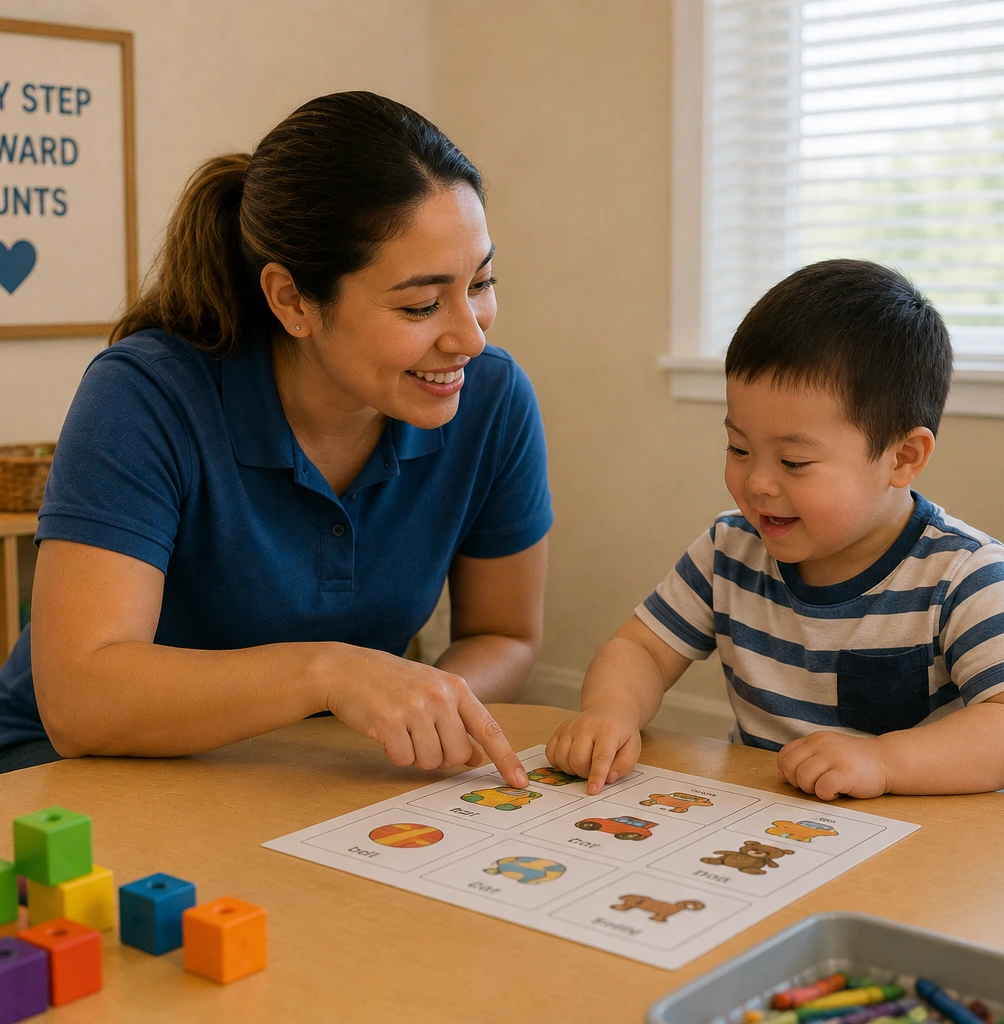

A smiling woman and young boy sit at a table pointing at pictures on a worksheet featuring colorful images of toys such as a truck, car, ball, and teddy bear, in a bright room with a window and educational toys nearby.
EARLY INTERVENTION (EIBI)
Smiling woman crouching outdoors giving a high five to a smiling young girl with a backpack on a sidewalk near a playground.
COMMUNITY-BASED SERVICES
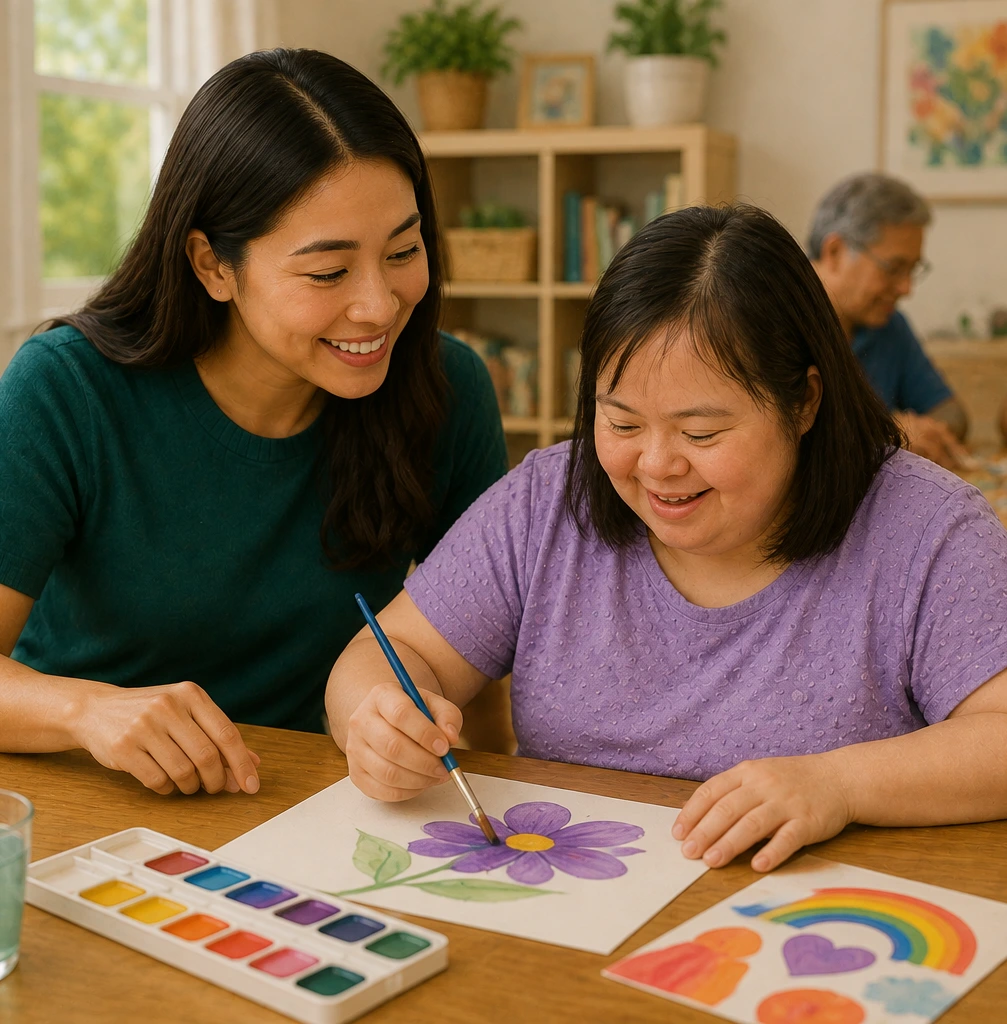
A young woman assists a smiling woman with Down syndrome as she paints a purple flower with watercolor at a wooden table, with a watercolor palette and a paper showing a rainbow and hearts nearby.
ADULT DAY PROGRAM
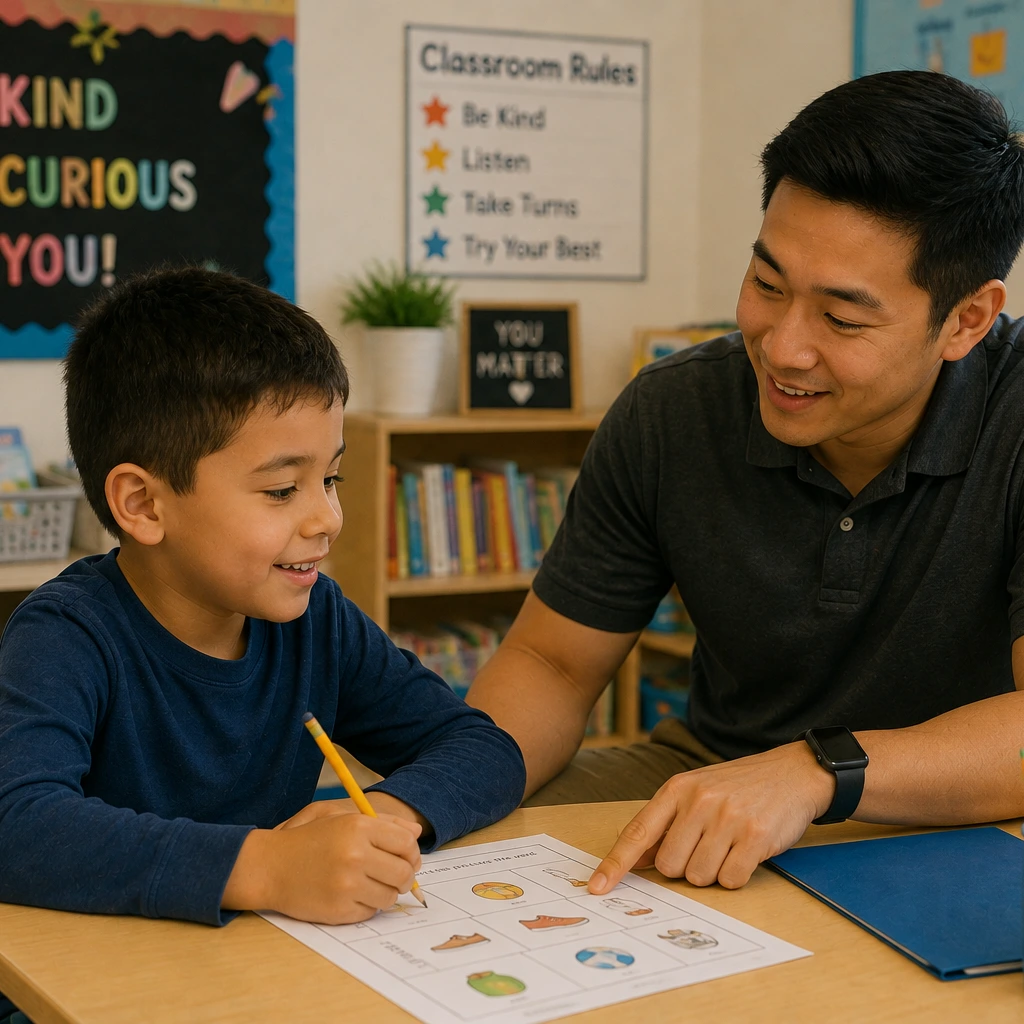
A young boy smiling and holding a pencil while working on a worksheet with pictures, as a male teacher in a black shirt smiles and points to the worksheet at a classroom desk.
SCHOOL-BASED SERVICES
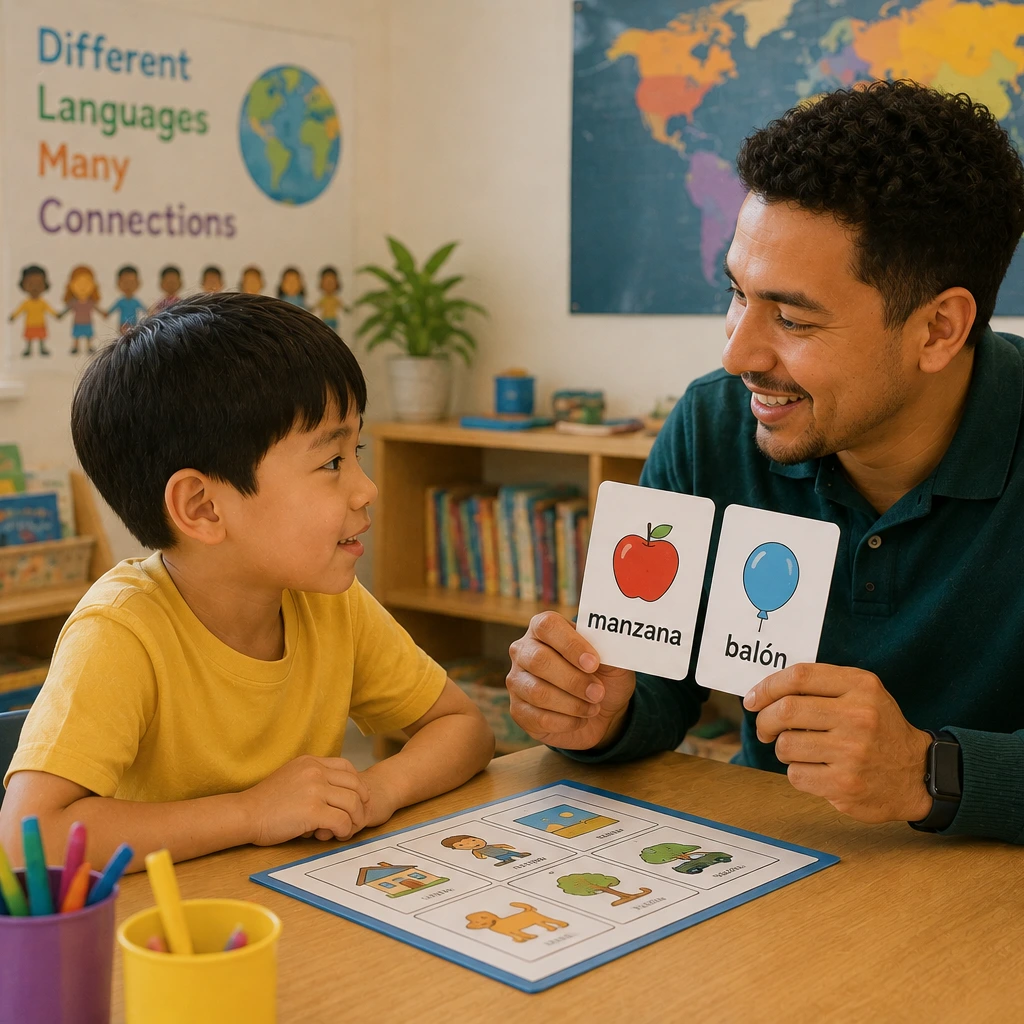
A man holds two flashcards with Spanish words and images: an apple labeled 'manzana' and a balloon labeled 'balón,' while a young boy attentively looks at them in a classroom setting with colorful markers on the table and a world map on the wall.
DIVERSE LANGUAGE PROGRAM (DLP)
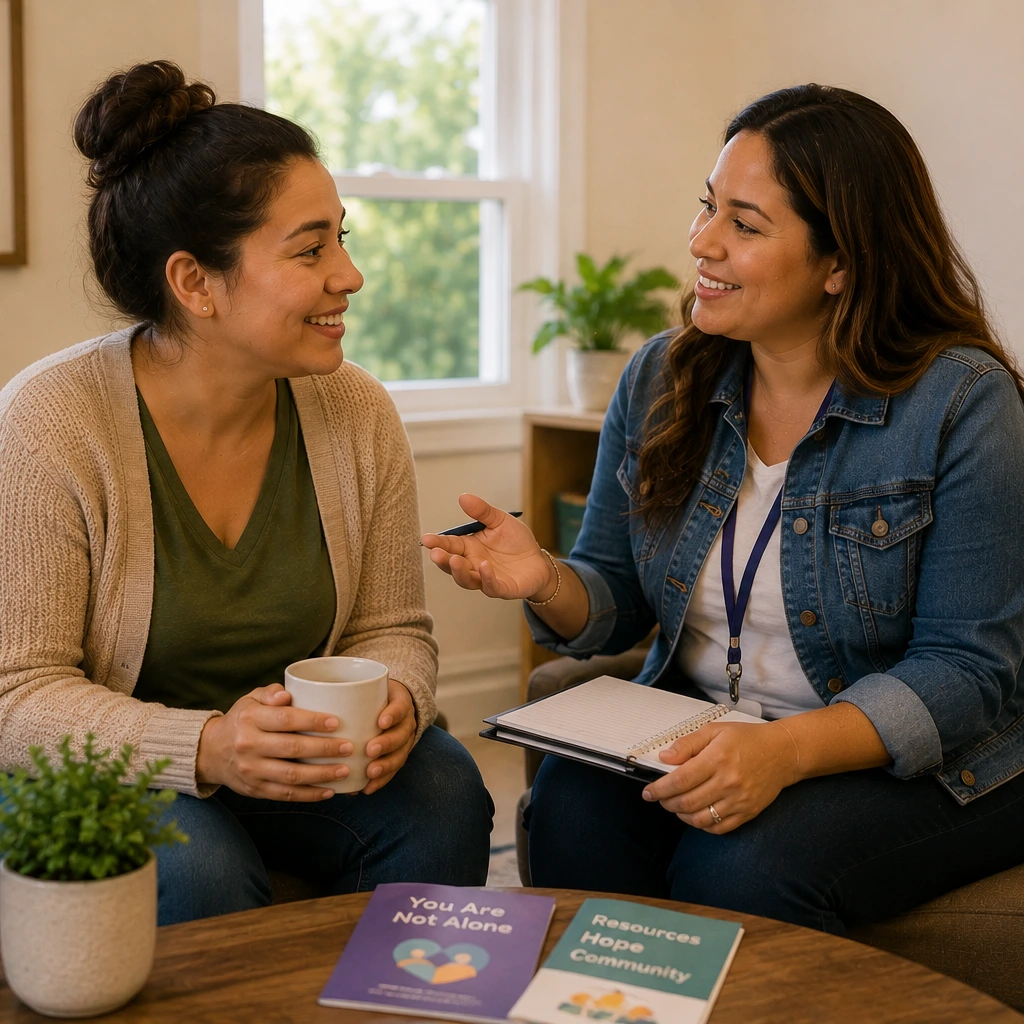
Two women engaged in a friendly conversation in a cozy room; one holds a white mug and wears a beige cardigan, the other holds an open notebook and pen wearing a denim jacket. On the wooden table in front of them are two pamphlets titled 'You Are Not Alone' and 'Resources Hope Community'.
FAMILY PEER SUPPORT SERVICES (FPSS)
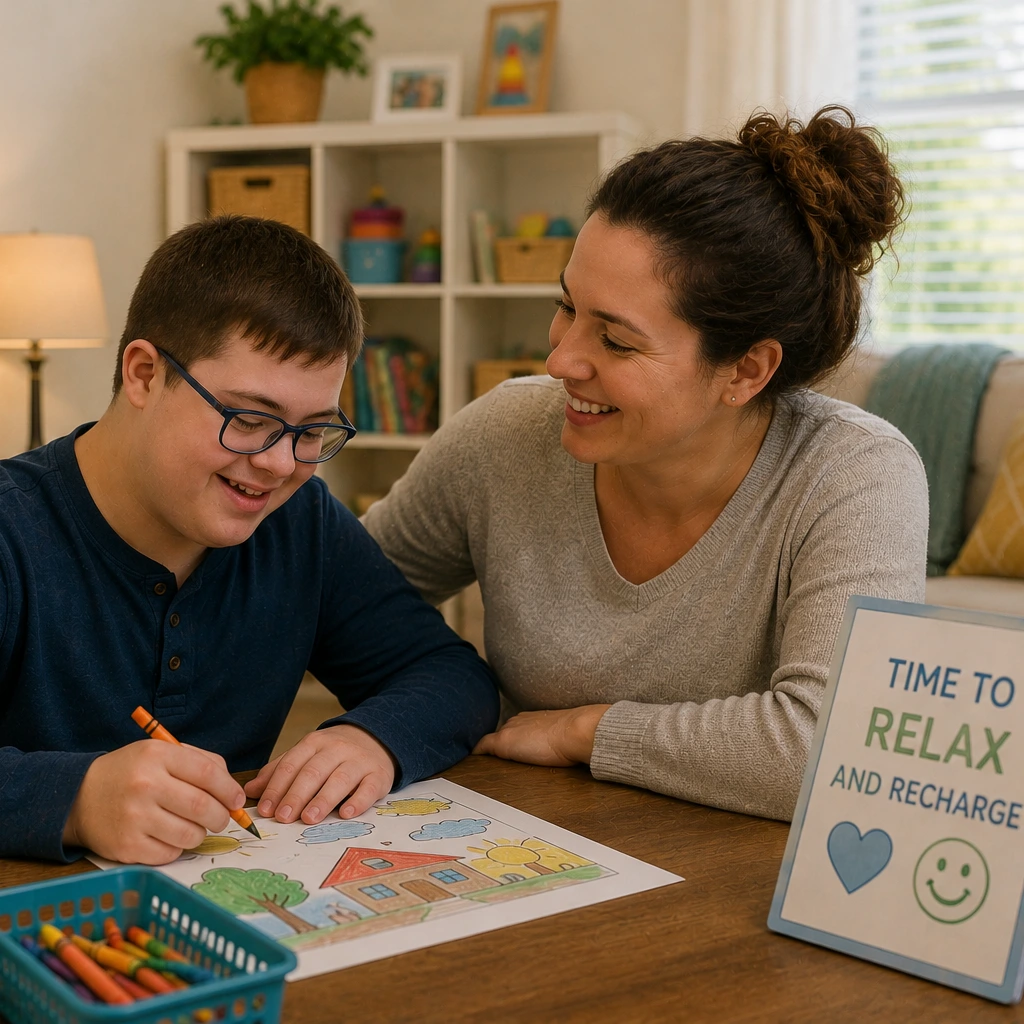
Smiling young boy with Down syndrome coloring a house drawing with crayons at a table, accompanied by a smiling woman watching supportively, with a sign nearby that reads 'Time to relax and recharge.'
RESPITE PROGRAM
Take a look to our Flyer and get familiar with our services.
Explore our Flyer →
Learn More About Our Services →

Your Journey With TBH

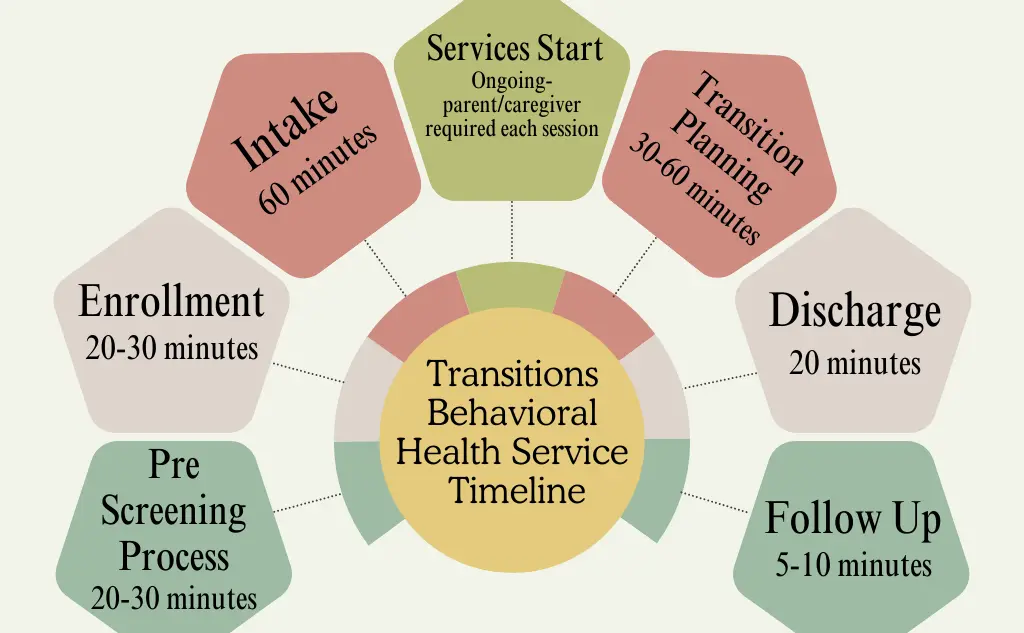
While every family's experience is individualized, this visual provides an overview of what you can expect from your first contact with TBH through ongoing services, transition planning, and discharge.

Circle diagram titled 'Transitions Behavioral Health Service Timeline' with seven labeled segments showing steps and estimated durations: Services Start (ongoing, parent/caregiver required each session), Intake (60 minutes), Transition Planning (30-60 minutes), Discharge (20 minutes), Follow Up (5-10 minutes), Pre Screening Process (20-30 minutes), and Enrollment (20-30 minutes).
Learn More About Your Service Journey →

What to Expect During Services

Services are individualized based on each client's needs, strengths, goals, and progress. Your team will work with you throughout different stages of services.

Two women sitting at a wooden table in a softly lit room, one with long dark hair holding a pen and clipboard, the other with her hair tied back, both engaged in a conversation, with a coffee cup and potted plants on the table and a sign on the wall reading 'Transitions Behavioral Health.'
ASSESSMENT
Understanding current strengths, needs, routines, behaviors, and priorities.
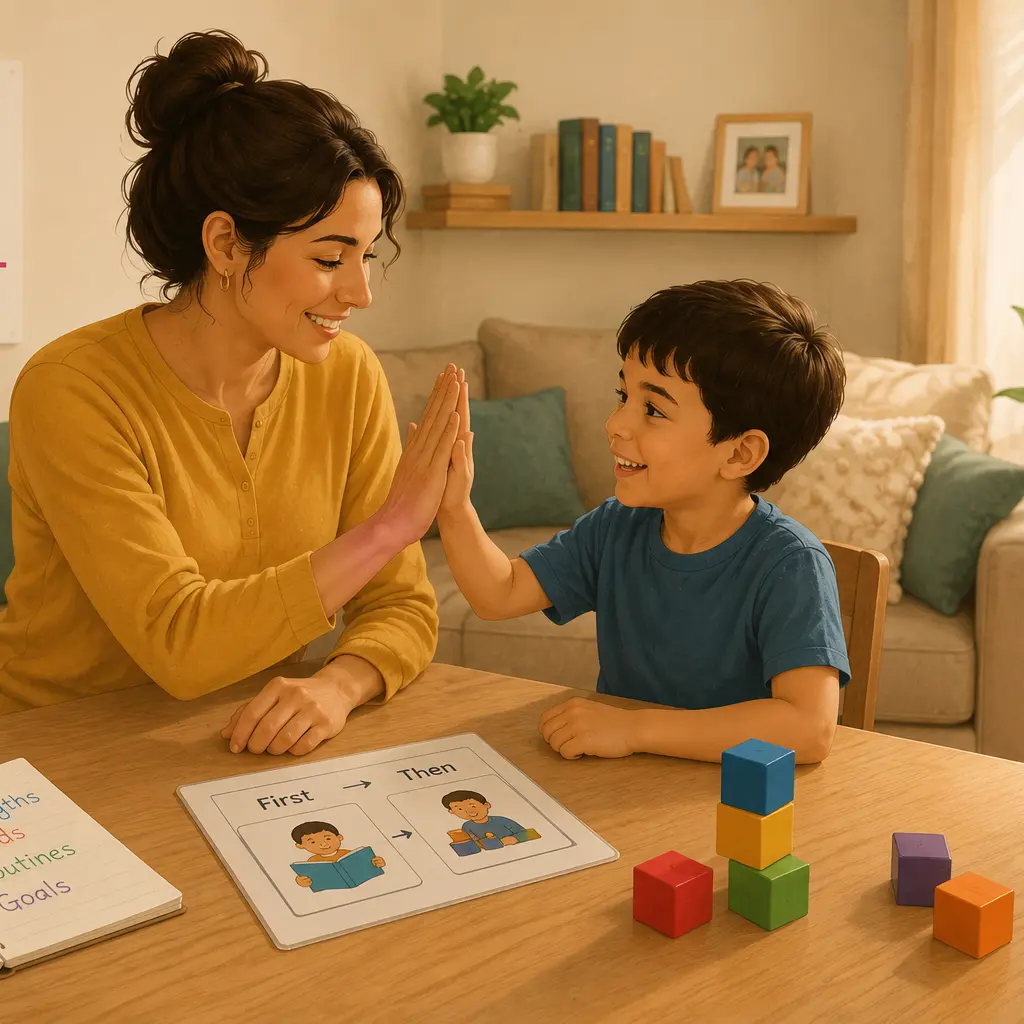
A woman and a young boy sit at a table, smiling and giving each other a high five during a learning activity, with colorful wooden blocks and a visual schedule card labeled 'First' and 'Then' on the table.
SKILL BUILDING
Developing and practicing individualized skills and strategies.
Smiling young boy with a backpack high-fives a woman crouching outside a building near a playground, with another woman walking in the background under sunny trees.
GENERALIZATION
Supporting skills across people, settings, activities, and everyday situations.
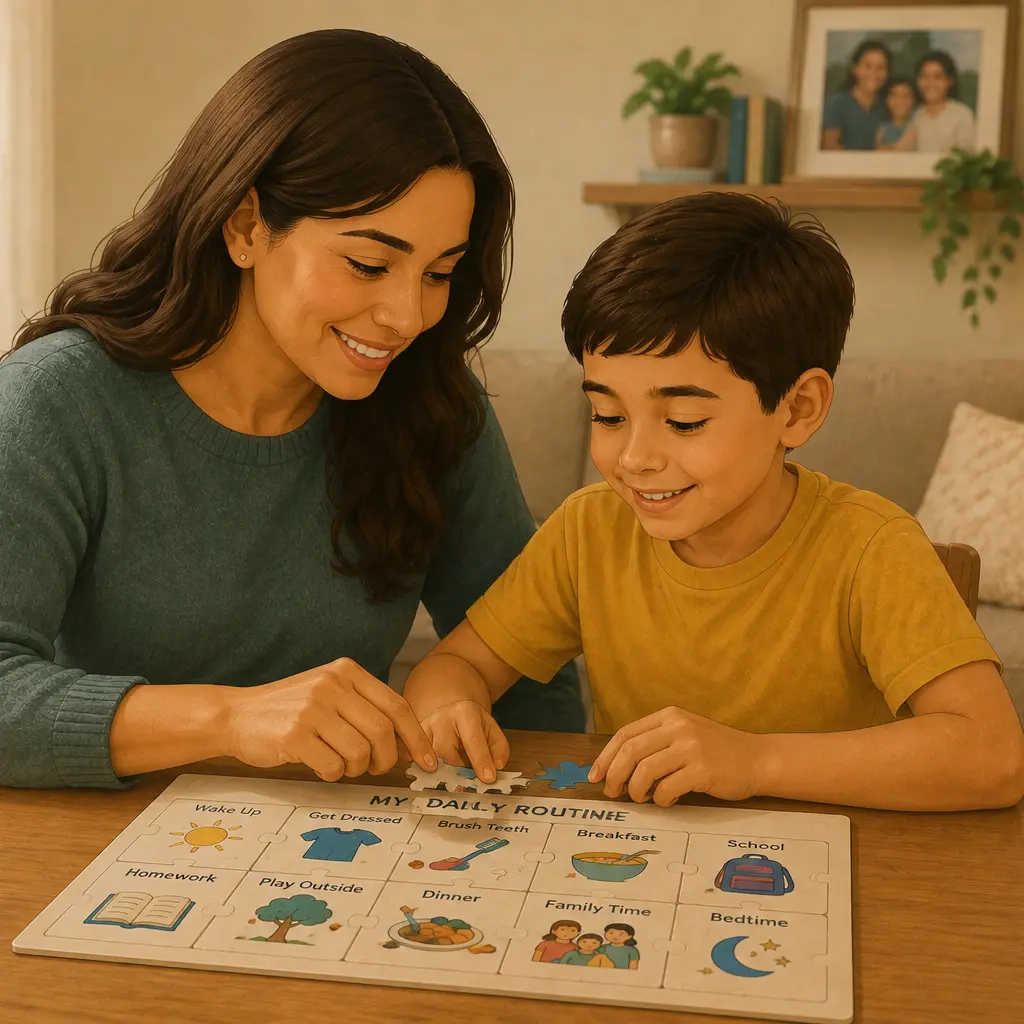
Woman and young boy sitting at a table smiling while assembling a daily routine puzzle with activities like wake up, get dressed, brush teeth, breakfast, school, homework, play outside, dinner, family time, and bedtime.
MAINTENANCE
Supporting continued progress and long-term use of learned skills.

Partnering with Caregivers

Caregivers are an important part of the treatment team. Your knowledge of your family member helps us understand their strengths, needs, routines, and priorities. Throughout services, your team will work alongside you to develop goals, review progress, and support skills in everyday life.
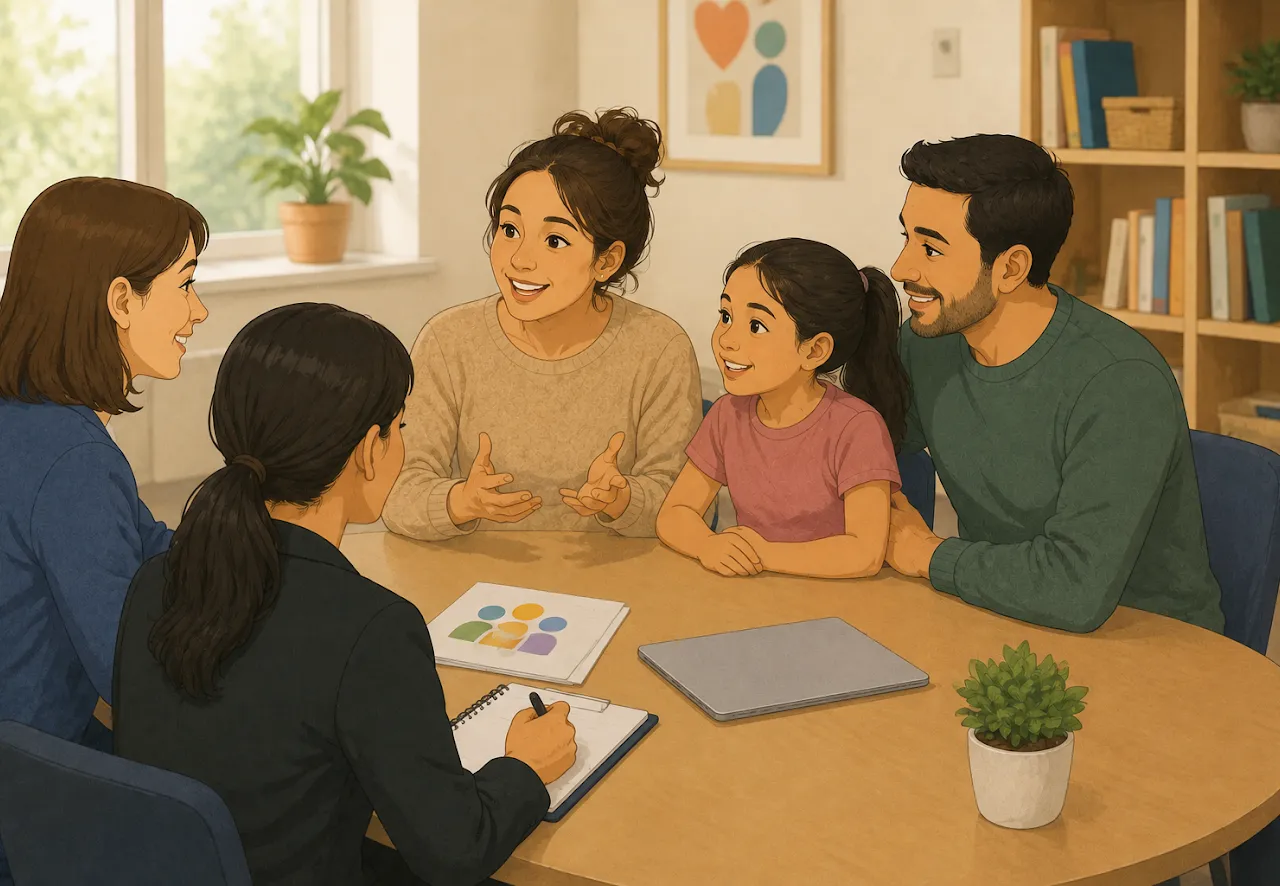
A family of three—a woman, a young girl, and a man—sitting at a round table smiling and talking with two women professionals; one is taking notes and the other listening attentively in a well-lit room with a window, plants, and bookshelves.
SHARE
Tell us about strengths, needs, routines, progress, and concerns.
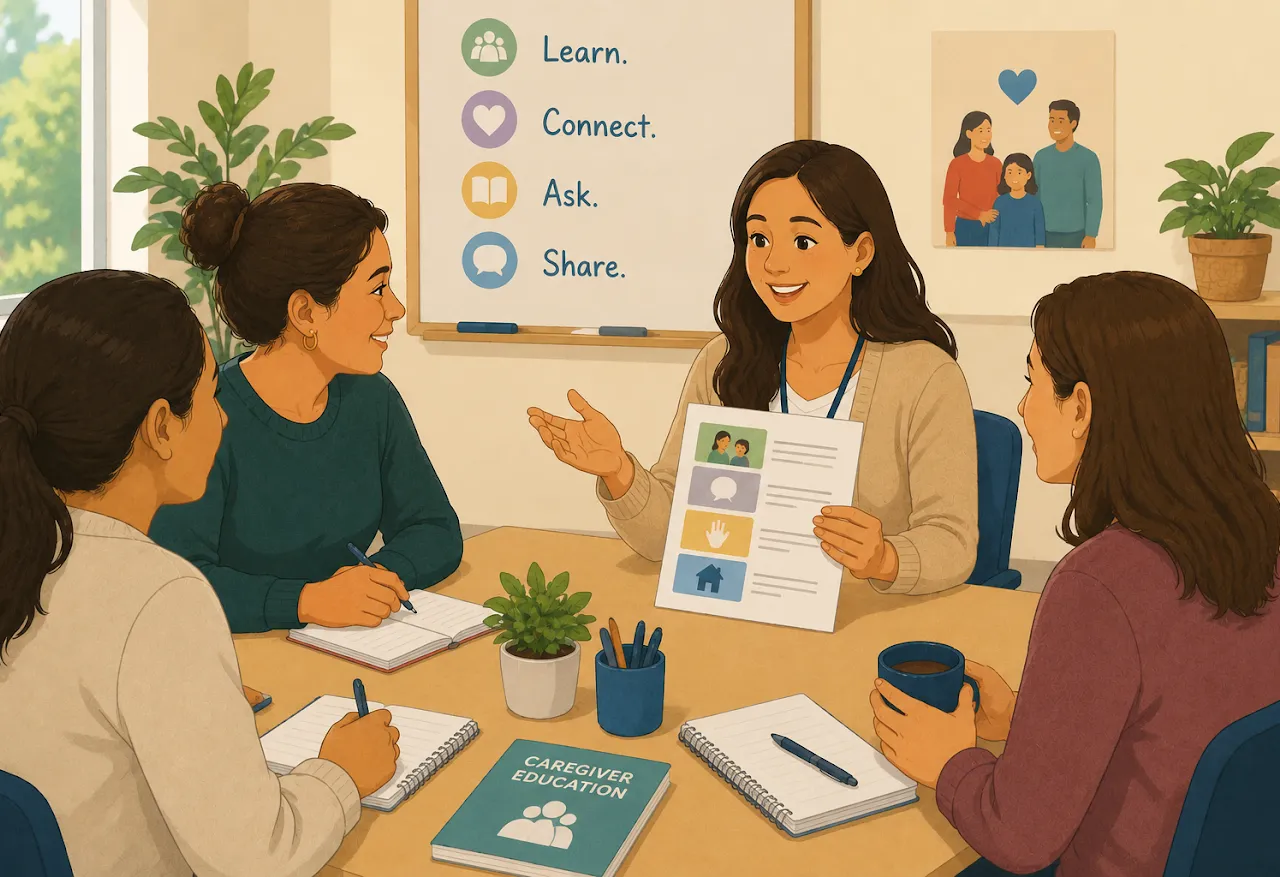
Four women sitting around a table engaged in a caregiver education session, with notebooks, a blue cup, and a booklet titled 'Caregiver Education.' A whiteboard behind them lists 'Learn. Connect. Ask. Share.', each with a corresponding icon. A family photo and potted plants are visible in the background.
PARTICIPATE
Take part in sessions, caregiver education, and conversations about your family member's care.
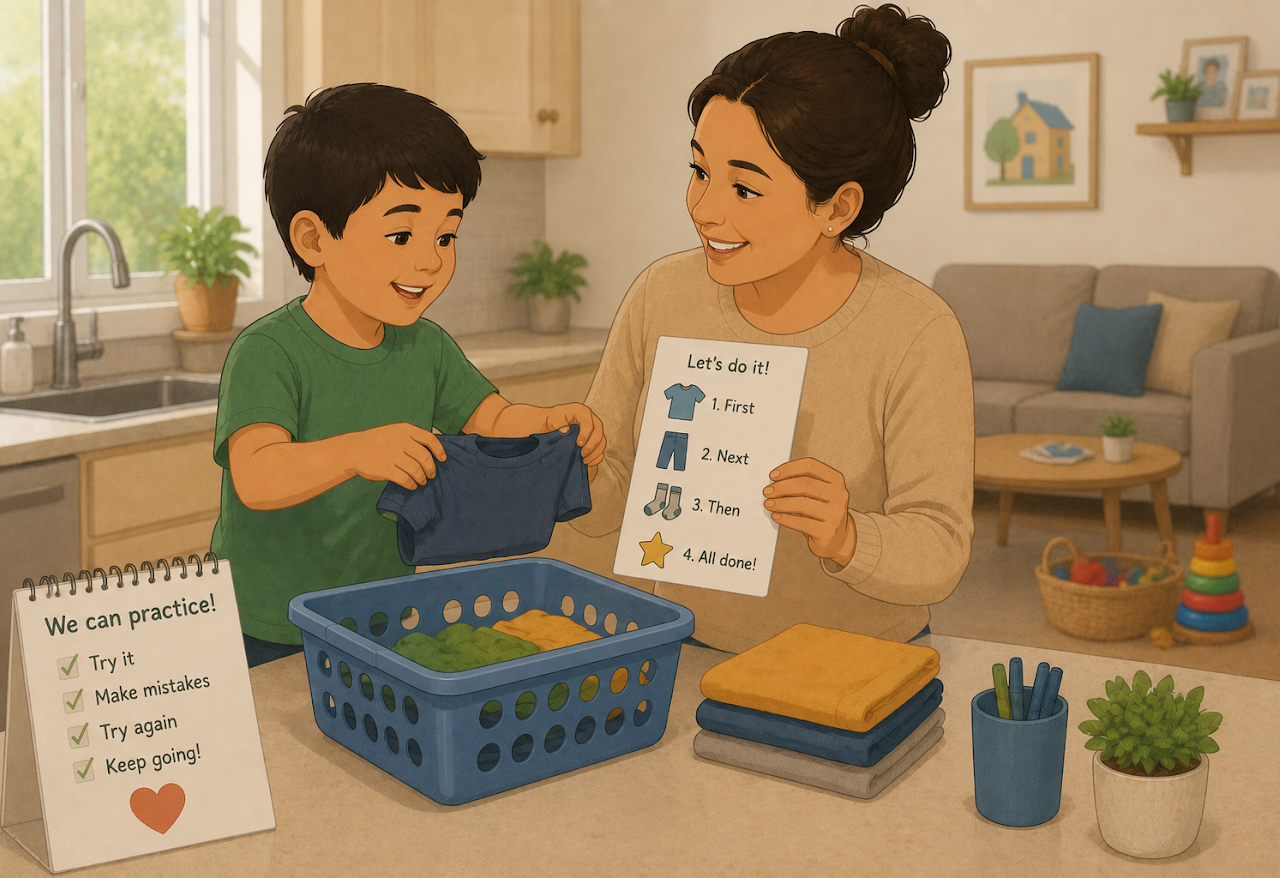
A woman and a young boy are in a kitchen folding clothes together. The boy holds a blue shirt above a laundry basket with folded clothes inside. The woman holds a chart titled 'Let's do it!' listing steps with images of a shirt, pants, socks, and a star: 1. First, 2. Next, 3. Then, 4. All done! A nearby sign reads 'We can practice!' with checkmarks next to: Try it, Make mistakes, Try again, Keep going!, and a red heart at the bottom. The background shows a living room with a couch, coffee table, toys, and framed pictures.
PRACTICE
Support new skills and strategies during everyday routines and activities.
Learn More About Caregiver Participation →

Parent & Caregiver Handbook

Cover of a Parent & Caregiver Handbook for Behavioral Health showing a smiling woman and child reading a book together, with text about TBH services and partnership for success.

The Parent & Caregiver Handbook provides important information to help families understand TBH services, expectations, policies, and other helpful information throughout care.

View the Parent & Caregiver Handbook →

Caregiver Resource Center

Explore helpful tools, educational materials, and resources designed to support you and your family throughout services.

Explore Caregiver Resources →

Caregiver Resource Center

Have questions about services? You're not alone. Visit our FAQ page for answers to common questions from individuals and caregivers.
  • What can I expect when services begin?
  • How can I participate in my family member's services?
  • Who should I contact if I have questions or concerns?
View All FAQs →

Need Help?

Have questions or aren't sure where to find something? Your TBH team is here to help.